Showing posts with label lunch. Show all posts

Tuesday, 26 August 2014

Smoked mackerel sandwich

If you're lucky enough to get free bread at work, you can always make yourself a sandwich for lunch - just bring in the filling ingredients.

While I was on a secondment we got free bread, so one day I made this filling:

1 smoked mackerel fillet, broken up a little
A few cornichon, finely chopped
A parsley sprig, finely chopped
1/2 teaspoon capers, finely chopped
A squeeze lemon juice
A squeeze salad cream

Mix all the ingredients together. I know people (ie Ollie) think salad cream is tacky, but I think it's lovely. It contains less fat than mayonnaise, and has more flavour.

When you're ready for lunch, toast 2 slices wholemeal or granary bread and spread one side with the filling. Top with a handful of rocket or watercress then with the other slice of toast.

You don't need a photo of a sandwich. 

Tuesday, 24 June 2014

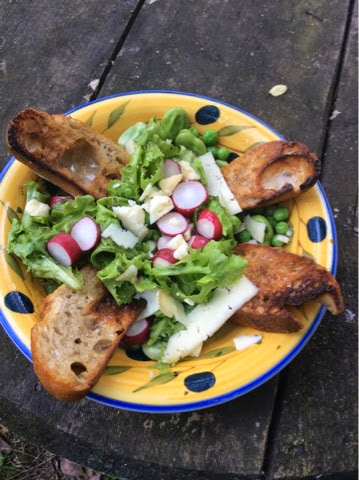
Ruskin Garden salad

I made this salad using the produce from the Ruskin Park Community Garden. It goes brilliantly with smoked ham. The recipe was inspired by one by Nigel Slater in his book Tender.

Ruskin Garden salad

Ruskin Garden salad ingredients

  • A handful freshly podded broad beans
  • A handful freshly podded peas
  • 2 handfuls lettuce
  • A few radishes
  • A sprig of mint, finely chopped
  • 4 small pieces ciabatta
  • A few shavings Swaledale or other chalky cheese

Dressing

  • 4 tablespoons light olive oil
  • Juice 1 lemon
  • 1 teaspoon Balsamic vinegar
  • Salt & pepper

 How to make Ruskin Garden salad

  1. Start by making the dressing. Combine all the ingredients in a screw-top jar and give it a good shake. 
  2. Toast the ciabatta lightly on both sides.
  3. Boil the broad beans for a few minutes in a pan of boiling water for about 5 minutes.
  4. Add the peas to the pan for the last 30 seconds.
  5. Drain the peas and beans, then tip into a bowl with the salad leaves and chopped mint.
  6. Pour over some of the dressing and toss to coat.
  7. Slice the radishes and sprinkle over the salad.
  8. Add some shavings of the cheese and serve while still warm.


Saturday, 10 May 2014

Experimental baking


Bread, Yorkshire pudding, lemon and poppy seed cake
 Using some plain flour in bread doesn't stop it rising but using some self-raising flour in Yorkshire puddings does stop them rising - go figure.

I've successfully made sourdough bread from my own started a couple of times, but my last few attempts failed. I've no idea how old the rye flour was that I'd used but decided to get a fresh lot for my next attempt. 
Hence I had a little rye flour taking up space in the cupboard. I used it to make up the full amount of flour needed for the recipe below, but didn't have quite have enough, so had to add plain flour as well.


Sour cream bread ingredients

  • 150ml sour cream*
  • 250ml warm water
  • 2 teaspoons salt
  • 2 teaspoons caster sugar
  • 1 teaspoon fast action yeast
  • 425g strong bread flour
  • 75g rye flour
  • 50g plain flour
  • Groundnut oil for kneading

*I didn't actually measure the sour cream, but it was about half of a 300ml pot.

How to make sour cream bread

  1. Mix the sour cream into the water with the salt, sugar and yeast.
  2. Mix together into a soggy ball.
  3. Cover with cling film and leave somewhere warm for 10 minutes (I put it in the bathroom).
  4. Lightly oil a work surface and your hands.
  5. Tip the dough out and knead gently for 30 seconds,
  6. Return the dough to the bowl, cover, and leave for another 10 minutes.
  7. Repeat the kneading, leave for another 10 minutes, then knead again.
  8. Leave covered in the bowl for an hour.
  9. Grease a loaf tin and line the base with silicone paper if you have it, or greaseproof paper if you don't.
  10. Pat the dough out so it's about 2cm thick, then roll it up.
  11. Squash the dough into the tin seam side down, pushing it so that it reaches the corners.
  12. Leave to rise for 90 minutes to 2 hours.
  13. Heat the oven to 200 degrees C and bake for 45 minutes.
  14. Leave to cool in the tin for half an hour before tipping out and leaving to cool on a wire rack till cold.

I hate making a roast beef dinner - it's too stressful trying to get everything ready and keep it hot at the same time. I made it last Sunday - the day I also made the sour cream bread and a lemon and poppy seed cake. What was I thinking?


Since I'd used plain flour in the bread, I didn't have enough for the Yorkshire puds, so substituted about half with self-raising flour, thinking this would make them even bigger. I was wrong. 

Jamie Oliver says don't open the oven door while your Yorkshire puds are in. I fail to see how this is possible while cooking all the other bits and pieces that go with a full-on roast beef dinner such as roast parsnips and potatoes. Luckily, the roast beef sandwiches with homemade horseradish cream we had for lunch the next day were a lot better than the actual lukewam dinner. 

To assemble a roast beef sandwich


Roast beef sandwich


  1. Cut 2 pieces of sour cream bread into thickinsh slices and butter liberally.
  2. Spread one piece of bread with homemade creamed horseradish (below).
  3. Cut thick slices of cold beef from the joint and place on top of the horseradish cream.
  4. Scatter a little coarse salt over the beef. 
  5. Slice 2 cornichon lengthways and lay on top of the beef.
  6. Add some peppery leaves such as watercress or rocket, then top with the second slice of bread.

Ingredients for creamed horseradish 

  • 65g fresh horseradish root, peeled and thinly sliced
  • 100 ml creme fraiche
  • 2 teaspoons sherry vinegar (or other if you don't have sherry)
  • 1 teaspoon English mustard
  • Pinch caster sugar

How to make creamed horseradish 

  1. Mix mustard into the vinegar then add the grated horseradish.
  2. Mix together then leave to stand for 10 minutes.
  3. Mix in the creme fraiche and season to taste.


Friday, 9 May 2014

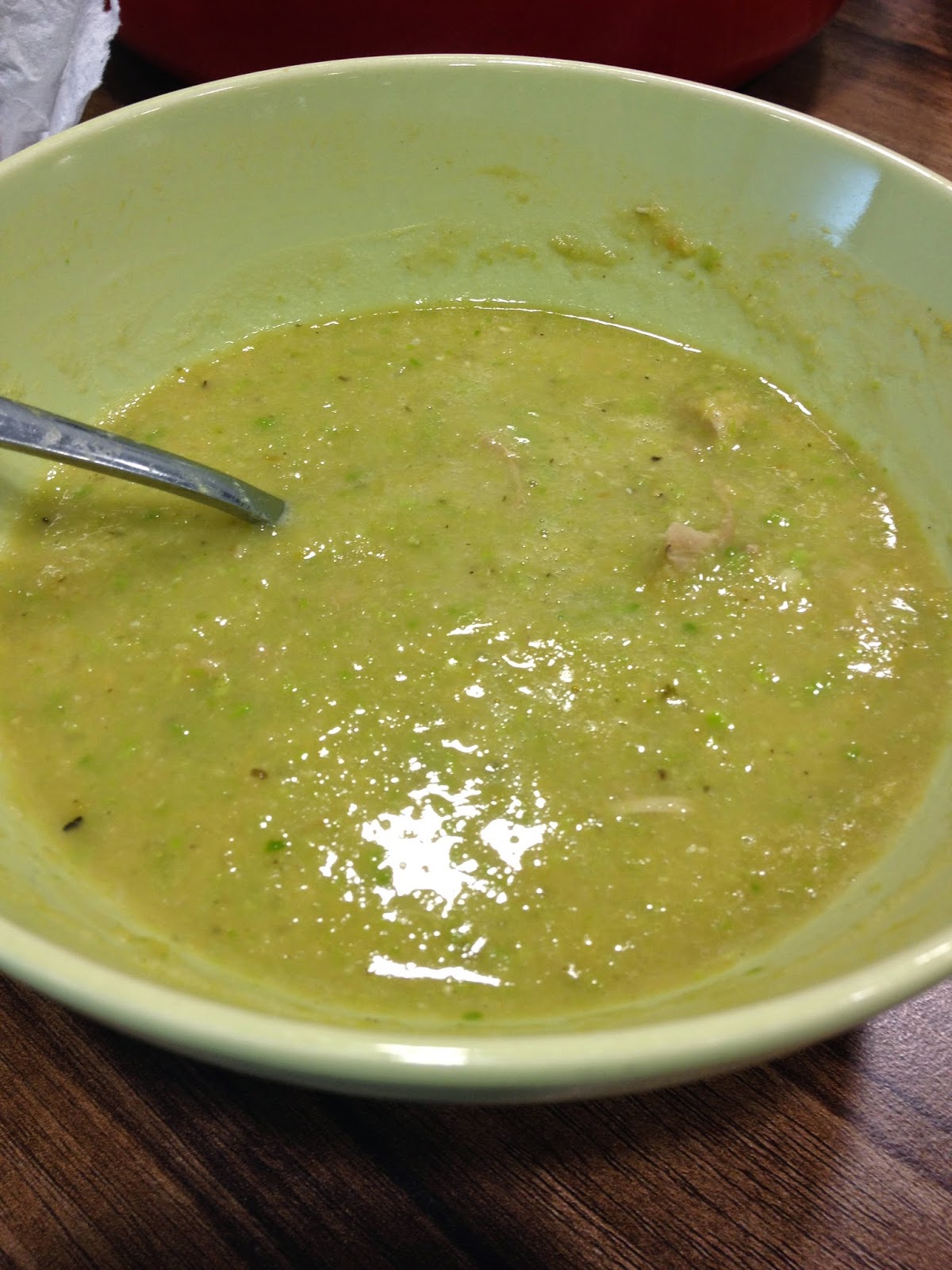
Pea and ham soup

Pea and ham soup in a green bowl
I thought soup weather was over but I was wrong - yesterday was rainy, windy and cold. Good thing I bought a ham hock at the weekend to make soup.

Ham hock sounds a lot posher than pork knuckle, but it's the same thing. In Poland it's called 'golonka', which is what we used to call my (half Polish) nephew when he was a baby.

I searched for soup recipes online and found ones that cooked vegetables with the ham hock for an hour, then pulled the meat off the hock to serve. Yuk! Vegetables that have been cooked for an hour!

Instead, I made a stock by cooking the veg and the ham then strained it. Amazingly, I got exactly 2 litres, so for once I can be accurate about the recipe quantities. However I forget to weigh the split peas before I soaked them, but it doesn't really matter how much you use -- it will just affect how thick you soup is. If it turns out too runny, add some red lentils to thicken, as they don't need to be pre-soaked, and only take about 15 minutes to cook. (The grated carrot will also thicken the soup slightly)

Ham hock stock 


  • 1 ham hock/pork knuckle
  • 2 small or 1 large carro
  • 2 medium onions
  • 2 sticks celery
  • 8 peppercorns
  • 1 bay leaf
  • 1 large sprig thyme (optional)

  1. Chop the vegetables roughly and add to a stock pot or large pan with the ham hock.
  2. Cover with cold water.
  3. Bring to the boil and simmer for about an hour.
  4. Leave everything in the pan till cool, then remove the ham hock and set to one side.
  5. Strain the liquor into a jug, and discard the soggy, overcooked vegetables.

Pea and ham soup ingredients


  • 2 medium onions
  • 2 sticks celery
  • 1 small carrot
  • Rapeseed or olive oil for frying
  • 2 litres ham hock stock
  • Meat pulled off 1 ham hock
  • 300g yellow split peas
  • 150g frozen peas

 How to make pea and ham soup

  1. Soak the split peas in a large bowl of cold water overnight.
  2. The next day, rinse well with cold water and leave to drain in a sieve over the bowl. 
  3. Heat a little rapeseed oil in a large pan.
  4. Finely chop 2 medium onions and 2 sticks celery.
  5. Fry onions and celery in the oil until soft.
  6. Grate the carrot and add to the pan.
  7. Pour in the stock.
  8. Add the split peas.
  9. Season with pepper and bring to the boil.
  10. Reduce to a simmer and continue cooking until the split peas are mushy.*
  11. Check the seasoning.
  12. Turn off the heat.
  13. Add the frozen peas - they will cook in the residual heat from the soup.
  14. Leave the soup to cool a little.
  15. Liquidise in batches.
  16. To serve, heat up only as much soup as you need, adding some of the ham pulled from the hock to warm through.
*The time taken for the split peas to become mushy will depend on how old they are -- if they have been sitting in the back of your cupboard for ages they could take a long time to go soft. 


Tuesday, 28 January 2014

Soda bread

To go with the easiest soup in the world, here's the easiest bread in the world. It contains no yeast and so doesn't require proving and there's no kneading. Instead, bicarbonate of soda is used as the leavening agent, hence the name 'soda bread'.

I based my soda bread on the Delia Smith recipe which can be found in Delia's How to Cook Book 1. I haven't been able to find her recipe online so have outlined the differences between mine and Delia's versions here. My variations were based entirely on what ingredients I had in the kitchen. The resulting loaf made a pretty amazing accompaniment to leek and potato soup.


Soda bread* ingredients


*Delia calls hers Irish soda bread. 

  • 175g wholemeal flour (not wholemeal bread flour) plus extra for dusting
  • 50g plain flour
  • 50g medium oatmeal (Delia uses pinhead oatmeal)
  • 1 teaspoon bicarbonate of soda
  • 1.5 teaspoons salt
  • 1 teaspoon sugar
  • 1 large egg
  • 275ml buttermilk or yoghurt - Delia specifies buttermilk since but I only had about 50ml I topped it up to the full amount with yoghurt.

Delia includes 25g wheatgerm in her recipe. I don't. Apparently it's very good for you. 


How to make soda bread

  1. Butter a 450g loaf tin.
  2. Heat the oven to the Magic Cooking Number, 190C.
  3. Mix all the dry ingredients together in a large bowl.
  4. Add the egg to the buttermilk/yoghurt and beat together.
  5. Pour the liquid into the dry ingredients and mix together to form a stiff dough.
  6. Put the dough into the prepared tin and smooth the top.
  7. Sprinkle with a little additional flour.
  8. Bake for 50-60 minutes. 

Alternative soda bread recipe


Alternative soda bread

Following on from last weekend's experimental baking, I decided to have a go at another soda bread recipe. Again, the ingredients and quantities used were mainly based on what was in the cupboard, so I think a degree of flexibility is perfectly acceptable. 

Alternative soda bread ingredients

  • 50g medium oatmeal
  • 125ml water
  • 75g Greek yoghurt
  • 75ml milk
  • 1 teaspoon soft brown sugar
  • 175g wholemeal flour
  • 1 teaspoon fine salt
  • 1 teaspoon bicarbonate of soda
  • 15g butter

How to make alternative soda bread 

  1. Add the oatmeal to a large pan and cover with the water.
  2. Bring to the boil then turn off the heat.
  3. Cover with a lid and leave for 50 minutes.
  4. Beat the yoghurt, milk and sugar together and keep in the fridge till needed.
  5. After 50 minutes, add the butter to the oatmeal and beat until it disappears.
  6. Heat the oven to 190 degrees C (the Magic Cooking Number)
  7. Add the yoghurt mixture to the oatmeal and beat until smooth.
  8. Add the flour, bicarb and salt to the mixture and beat together to form a sticky dough.
  9. Butter and line a loaf tin.
  10. Tip the dough into the tin and cover the top, either with silicome paper if using, or tin foil.
  11. Bake for 15 minutes.
  12. Remove the foil/silicone and bake for another 30 minutes.


Monday, 27 January 2014

Leek and potato soup

This has to be the easiest soup in the world to make, and surely one of the most satisfying to eat - it feels like putting on a big fluffy pair of slippers.

Goes perfectly with homemade soda bread. 
 

Leek and potato soup with homemade soda bread


My brother told me how to make this soup after having made it when he was in primary school. He is 33 now so does that mean I can call it 'an old family recipe'?


Leek and potato soup ingredients


  • Rapeseed oil*
  • 1 large onion
  • 2 large leeks
  • 2 medium floury potatoes
  • 1 litre vegetable stock
  • Plenty salt and pepper
  • A little grated Cheddar, to serve

*I doubt my brother recommended using rapeseed oil so feel free to substitute for olive or butter. 


How to make leek and potato soup


  1. Heat a little rapeseed oil in a large pan.
  2. Chop the onion finely and add to the pan.
  3. Put the lid on the pan and sweat the onions over a low heat while you prepare the leeks.
  4. Remove the outer leaves from the leeks, then chop into long batons. Slice each baton lengthways, then run under the cold tap to remove any soil.
  5. Slice the cleaned leeks into smaller pieces.
  6. Add to the onions and sweat until both are soft (about 10 minutes)
  7. Peel the potatoes and cut into even sized pieces.
  8. Add the vegetable stock to the pan.
  9. Add the potatoes and season with plenty salt and pepper.
  10. Put the lid back on the pan and bring everything to the boil.
  11. Reduce the heat to a simmer and cook until the potatoes are tender.
  12. Leave the soup to cool slightly, then either liquidise in a food processor or mash with a potato masher.
  13. Check the seasoning. 
  14. Sprinkle over a little grated Cheddar to serve.

Sunday, 26 January 2014

Carrot and lentil soup

It's been raining for what seems like a year so I need to stock up my freezer with a selection of soups for lunch at work. While the best soups always contain cheese (cauliflower/broccoli and blue cheese, leek and potato with cheddar), lentils can turn an essentially dull vegetable soup into a satisfying meal, while still being healthy.

I was feeling lazy when I made this soup, and couldn't be bothered to dry roast and crush any fresh spices so I used pre-ground spices instead. The result was disappointing, until I upped the quantity used considerably. 


Carrot and lentil soup ingredients

  • 3 large carrots, peeled and grated
  • 2 sticks celery, finely chopped
  • 1/2 swede or a turnip
  • 1 medium onion, finely diced
  • 3 teaspoon ground cumin
  • 2 teaspoon ground coriander
  • 1 teaspoon turmeric 
  • 1 teaspoon ground ginger
  • 1 teaspoon asafoetida
  • 1 teaspoon sambal oelek or other chilli sauce
  • 2 JOTs fresh root ginger, peeled and grated
  • I teaspooon fresh ginger paste
  • 150g red lentils, rinsed
  • 2 teaspoons Swiss bouillon stock powder
  • Rind of 1 orange
  • Plenty salt and black pepper
  • About 1 litre water 


How to make carrot and lentil soup


  1. Heat a little rapeseed oil in a large pan till hot.
  2. Add the chopped onion and celery and fry till soft and golden.
  3. Add the grated carrot and ginger, and cook for about 5 minutes over a low heat.
  4. Add the spices, approx 1 litre cold water and the lentils.
  5. Bring to the boil then reduce to a simmer.
  6. Add some boiling water to the Swiss bouillon stock powder and mix till dissolved and you have a watery liquid then pour this in the pan. 
  7. Add the grated orange zest and ginger paste. 
  8. Turn off the heat and allow the soup to cool slightly before tasting and adding seasoning. 


Thursday, 23 January 2014

Really complicated dahl soup

I made a really complicated dahl recipe by from the Guardian by Urvesh Parvais (me neither) when some friends came round for lunch on New Year's Day. As usual, I had tons left over, and as usual I turned the leftover dahl into soup.

Really complicated dahl soup
As I said, this dahl was really complicated. To give you an idea how complicated, here's the list of ingredients:


Complicated dahl ingredients

  • red lentils 250g
  • sunflower oil 3 tbsp 
  • dry chilli 1 
  • cumin seeds 1 heaped tsp 
  • asafoetida ¼ tsp 
  • garlic ½ small bulb, sliced 1mm 
  • onion ½, finely sliced
  • turmeric ½ level tsp 
  • salt 2 level tsp (then add to taste) 
  • ginger finely chopped 1½ heaped tbsp 
  • green chilli 2, finely chopped (adjust to your taste) 
  • dhana jeru (2 parts coriander seed, 1 part cumin seed) 3 heaped tsp 
  • fresh coriander ½ bunch (reserve a little for garnish), roughly chopped 
  • tomatoes 100g, roughly chopped 
  • jaggery (or sugar) 1½ level tsp (add less to begin with then adjust to taste) 
  • garam masalo ½ level tsp

I could go on to explain the extremely complicated method for making this dahl, but my guess is you're not going to bother making it, so I'm not going to bother writing it. If you fancy giving it a shot, go to the Guardian website.  

My friends did say that it was lovely dahl, though it was a little too thick for my liking. However, when I turned it into soup and had some at work it was way too garlicky. When I first read the recipe I wasn't sure if it really meant 1/2 bulb garlic, or if this was a typo and was meant to read 1/2 clove garlic. Deciding a clove was too little and a bulb too much, I think I settled on about 4 cloves. The garlic is sliced, not crushed, and half of it is added in the last 5-10 minutes' cooking time. It was these slices that I picked out of my soup, though admittedly they were slightly larger than the recommended 1mm thickness. Guiltily, I threw away the remaining portion of soup.

Wednesday, 22 January 2014

Pumpkin soup

This soup turned out to be really quite hot - perfect for the first week in January back at work.

Pumpkin soup ingredients

  • 1 medium onion
  • 1/2 medium pumpkin
  • 1 small carrot
  • 1/2 tablespoon ginger purée 
  • 1/2 tablespoon homemade curry powder
  • 1 small hot red chilli
  • 200ml coconut milk
  • 200ml vegetable stock
  • Handful sweet corn

  How to make pumpkin soup

  1. Heat a little groundnut oil in a large pan.
  2. Chop the onion finely and sweat in the pan till soft (about 5 minutes).
  3. Chop the pumpkin into small chunks.  
  4. Grate the carrot. 
  5. Add the ginger puree and curry powder and stir for 30 seconds.
  6. Add the pumpkin and carrot and sweat for a couple of minutes.
  7. Pour in the coconut milk and vegetable stock.
  8. Pierce the chilli and add to the pan.
  9. Bring to the boil then reduce to a simmer.
  10. Simmer until the pumpkin is soft and beginning to collapse - about 20 minutes as a guide but the time will depend on the size of the pumpkin pieces. 
  11. Turn off the heat and leave to cool slightly.
  12. Fish out the chilli.
  13. Mash the pumpkin with a potato masher. You could liquidize the soup if you prefer, but I like a bit of texture.
  14. Sprinkle the sweet corn over the top of the soup before you serve. 
 
Pumpkin soup


Tuesday, 7 January 2014

Thick chicken soup

For this soup I used the leftovers and stock from New Year's Eve's roast chicken with tarragon, so if you don't have any tarragon wilting in your fridge you can do without. 

  Thick chicken soup ingredients

  • About 700ml homemade chicken stock
  • 1 large leek
  • 1 large banana shallot
  • About 200ml milk
  • 2 tablespoons crème fraîche
  • 1 handful cooked chicken per person
  • About 3 sprigs tarragon
  • 1 medium potato

How to make thick chicken soup

  1. Heat a little rapeseed oil in a large pan.
  2. Finely chop the shallot and leek, add to the pan and sweat gently till soft.
  3. Add the stock to the pan.
  4. Peel the potato, chop into small cubes and add to the pan.
  5. Bring to the boil then simmer gently for about 20 minutes.
  6. Chop the tarragon very finely and add to the soup along with the milk and crème fraîche.
  7. Simmer for another 10 minutes - the potato should have collapsed completely and the soup thickened. If the soup is not as thick as you'd like, turn the heat up a little and continue to cook till it reduces and thickens.
  8. Add the cooked chicken, torn into pieces, just before you want to serve the soup to warm through. 
If you've made a big batch of soup to freeze or have later and only want a portion or two now, heat just enough soup and chicken as you need in a separate pan - if you heat then reheat the chicken it will get tough and taste awful. 

Sunday, 1 September 2013

Lentil loaf


I don't understand people who don't like lentils - what on earth is offensive about a lentil? They don't really taste of anything, are really good for you, fill you up and are cheap. In other words, an ideal ingredient for an inexpensive lunch at work. Add a bit of cheese, onion and chili and it tastes of cheese, onion and chili. (It does not, as O once said, taste of socks.)

The original recipe for this lentil loaf was obviously written in the 70s as all the ingredients are in imperial and the first line reads 'Pick over the lentils for sticks and stones'. Luckily lentils have come on a long way since then and you don't need to worry about stray sticks and stones.

Lentil loaf ingredients


  • 175g red lentils
  • 100g mature cheddar
  • 1 onion (today I used a red onion, but any colour will do)
  • Pinch chili flakes
  • 1 large egg
  • Salt & black pepper
  • 1 tablespoon chopped parsley (optional)

  How to make lentil loaf


  1. Rinse the lentils thoroughly under cold running water.
  2. Put them in a small pan that has a tight-fitting lid.
  3. Cover with about 250ml cold water, put the lid on and bring to the boil.
  4. Turn down the heat to a simmer.
  5. Cook for about 15 minutes, checking regularly that there is still sufficient water - I have lost count of the times I have burnt the lentils to the pan (including today).
  6. Chop the onion finely.
  7. Grate the cheese.
  8. Beat the egg in a small bowl or jug.
  9. Heat the oven to 190 degrees C.
  10. When the lentils are ready they will have collapsed and formed a stiff puree: 


  • Add the cheese, onion, chili, salt, pepper and parsley (if using) to the lentils and mix thoroughly.
  • Add the egg and lemon juice. 
  • You now needs to turn the mixture into a prepared loaf tin. You can prepare the tin by greasing it with butter, adding a disposable loaf tin liner or, like I do, adding a strip of greaseproof paper across the base and sides of the tin: 


  • Bake for about 50 minutes, till the loaf feels firm and is golden.

While you can serve this hot (in which case leave it to stand for 10 minutes before eating) I prefer it cold, in which case its best made the day before you want to eat it. The recipe states that this serves 4, but I find this gives portions that are a little too large. Slice into 5 pieces, wrap in tinfoil and eat each slice with a salad for lunch. Just vary the salad or the dressing to stop it becoming boring.


Monday, 10 December 2012

Chicken liver paté a la Mo/M&S


My mum (Maureen) makes this chicken liver paté recipe every Christmas, and every Christmas we search through all her cookery books and find at least 2 other paté recipes before we find the right one.

It’s from one of her M&S cookery books from the 70s. These books were brilliant – sadly M&S don’t make cookery books any more.

The amount below is the quantity given in the book, but since it freezes so well we normally make double.


Chicken liver paté ingredients


  • 75g butter
  • 1 medium onion
  • 225g chicken livers
  • 1 clove garlic
  • ½ teaspoon dried thyme
  • 1 bay leaf
  • 2 teaspoons brandy
  • Salt and pepper

How to make chicken liver paté


I have reduced this recipe to the bare minimum as it is so easy to make.

  1. Fry the onions and garlic in the butter
  2. Add the chicken livers
  3. Add everything else
  4. Cook
  5. Process
  6. Add brandy
  7. Job done!
There's no photo to accompany this recipe at the moment as I haven't actually made it yet this year, but have posted the recipe early at Kerry's request. Maybe you could send in a photo Kerry when you've made it? 

Sunday, 4 November 2012

Roasted vegetable salad

Roasted vegaletable salad with balsamic dressing and yoghurt on the side

A couple of weeks ago salad club was roasted vegetables. This was the list of ingredients:
  • Roasted aubergines
  • Roasted mixed peppers and onions
  • Roasted squash or pumpkin
  • Roasted sweet potato
  • Roasted potato
  • Sundried tomatoes
  • Feta cheese
  • Pineuts
  • Balsamic dressing
  • Yoghurt 

For some reason, the person who was allocated squash/pumkin was unable to find any so brought aubergine instead. (Really? Two weeks before Hallowe'en?? Where was he looking? An aubergine shop?) This means we had 2 lots of aubergine, but no squash.

I invited everyone to tell me how they prepared their vegetables but only received four replies. I love the different styles so have copied them verbatim below.

For the sweet potato (as described by Yuki)


Peeled and chopped sweet potato into bite size chunks.
Place in baking tray, drizzle with olive oil and sprinkle cinnamon on top.
Put in oven at 180C and roast for 25mins. 


Paula's comment:  as expected from Yuki, practical, no nonesense, easy to follow instructions. 

For the potatoes (as described by Kate)

1lb of new potatoes
handful of chopped fresh dill
enough olive oil to cover the potatoes
Salt for taste


Paula's comment: I think these were then roasted in the oven, though at what temperature and for how long I don't know. I would also suggest that you simply drizzle olive oil over the potatoes, then toss to coat, rather than submerging them in oil.  

For (one of thee ) aubergines (as described by Amber)

we washed the aubergine, then chopped into cubes, put it in a colander and salted them for 30minutes, then rinsed, then tossed with olive oil, salt, chilli flakes, pepper and  italian mixed herbs. we baked it spread flat on a baking tray and placed in the oven at 180 for around 1 hr, checking and turning occasionally. 

Paula's comment: aw, how cute - love how Amber always says 'we' . Rehan (the other half of the 'we') is welcome at Salad Club any time.

For the balsamic salad dressing (as described by Gina)

Leave a couple minutes earlier so you have time to stop at Tesco
Check email to remember what ingredient assignment is
Locate salad dressing isle at Tesco
Spend a few minutes browsing for the best looking bottle of balsamic
Select and remove from shelf
Continue to check out and pay for your item
Store in fridge until salad club begins
Shake well and serve. 


Paula's comment: Top marks Gina, especially given that you subsequently had to miss Salad Club. Again. 

For the yoghurt side dish


This was my ingredient - it's something my Polish sister-in-law often serves with roast vegetables. 


  • About half a large tub (200-250ml) natural or Greek yoghurt
  • 2 cloves garlic, lightly crushed in their skins
  • A handful chopped parsley
  • A handful chopped dill
  • A small lug of olive oil
  • Salt and black pepper


  1. Mix all the ingredients together at least an hour before you want to serve to let the yoghurt take up the flavours.
  2. Remove the pieces of garlic before serving.


This was a tasty and filling salad, despite the lack of squash and only half the amount of feta since the other half was mouldy. Cheap too.


Thai chili beef salad

Danielle and Courtney with Thai beef salad
This salad was amazing - I urge you to try it. 

It's very simple to make, only requiring a bit of chopping and steak frying. Even the dressing is effortless. 
 

Thai chilli beef salad ingredients for 12

  • Fried steak, cut into thin strips.  
  • 3 packs rice noodles
  • I cucumber, cut into fine strips
  • I yellow or red pepper, cut into thin strips
  • I bunch spring onions, finely sliced
  • 1 bag cashew nuts, chopped
  • I bag ready washed spinach
  • Mint and coriander, finely chopped
  • Green and red chillies, finely chopped 
  • Dressing: 3 parts sweet chilli sauce, 3 parts lime juice to two parts fish sauce

For lunch you only need a little bit of steak, otherwise you'd be stuck in your swivel chair for the rest of the afternoon, unable even to swivel. We used 3 steaks for 12 people. Last night, I used 1 rump steak for 2 of us.

Tuesday, 23 October 2012

Smoked salmon and new potato salad

Heaven, Courtney, Kate, Danielle, Yuki, Andrea, Gina, Joyce

The problem with writing up Salad Club recipes is that quantities are rarely specified. This means they can be little vague, although generally the quantities seem to work out fine.

This week, however, we had a large turnout, and thought a few extra potatoes were needed. We 'steamed' these in the microwave by cutting them in half, placing in a large tupperware container, covering with boiling water and cooking on a high setting for 10 minutes. I have to say they worked well. Thanks to Kate for the instructions on microwaving potatoes. . 


Smoked salmon and potato salad with horseradish ingredients

Enough for 12
  • 3 packs smoked salmon
  • New potatoes, boiled
  • 1 cucumber, cut into matchsticks
  • String beans (aka green beans or French beans)
  • 2 avocados, roughly chopped
  • 1 red onion, finely sliced
  • 3 bags watercress*

Creme fraiche and horseradish dressing ingredients

  • About 500ml half fat creme fraiche
  • 1/2 large bunch dill
  • Small amount chopped fresh parsley
  • 1 bunch chopped chives
  • Rind of 1 unwaxed lemon
  • Juice of half a lemon
  • 2 tablespoon hot horseradish sauce
  • Salt and pepper

How to make fraiche and horseradish dressing


  1. Chop the herbs finely and mix together with all the other ingredients.
  2. Season to taste, adding more lemon and horseradish till the dressing has the right balance.

A word on watercress


*I watched some rubbish programme last week where James Martin annoyed me about how watercress was underused. Rubbish! Watercress is ubiquitous!

Watercress is a great salad ingredient but doesn't hang around in a good condition for very long. If you get it mixed with other leaves in packets from the supermarket its always the first one to go soggy. You end up either throwing out the whole lot or picking out the rotten watercress to salvage the rocket and spinach. Packs of just watercress from the greengrocer need using up within a day or two before they turn slimy and unusable.

Of course, watercress doesn't just belong in salads. Its peppery taste and vivid green colour can be turned into a cracking sauce to go with fish, or, my favourite, fishcakes.


Friday, 5 October 2012

Salad Club: Tastes of Morocco

From left: Kate, Peggy, Yuki, Danielle
I've been on holiday for a week and in my absence it seems that Salad Club was also on a break.
On my return, we have a Moroccan themed Salad Club.

I am responsible for the hummus and roasted red peppers. I do my usual hummus recipe.

For the roasted red peppers, I do some online research, and find that controversy rages as to the best way of doing this. Some roast the peppers over a naked gas flame. This seems like a tedious and slightly dangerous method to me. So then. Oven? Grill? Whole? Quartered? Who cares? Does it really make that much difference? The answer is probably yes. Having cut and deseeded the peppers and roasted them in a hot oven for about an hour, I took them out and put them straight into a tupperware box with a clip lid, thinking this would make the skins easy to peel off when cool. Wrong. After about half an hour I ended up with an incompletely peeled pathetic little heap of pepper pieces.  I swear, next time I buy them in a jar.


Sorry for cutting your head off Danielle


The rest of the Salad Clubbers brought in the following:

  • Cooked chickpeas
  • Steak
  • Tomato salad
  • Artichokes
  • Lemon couscous
  • Halloumi
  • Cucumber, cut into chunks
  • Salad leaves
  • Steak 
  • Chopped dill
  • Chopped parsley


For the couscous (Yuki)

Add the rind of half a lemon, some thyme and Moroccan spice mix to the couscous then cover with boiling water and leave to soak for about 10 minutes.


For the tomatoes (Kate)


  • Dice tomatoes and add the following:
  • Garlic
  • Parsely
  • Dill
  • Spring onion
  • Lemon peel
  • Cumin
  • Ras el hanout
  • Curry powder
  • Nutmeg
  • Red wine vinegar
  • Salt and pepper
 
As for the quantities, you're on your own here - this is Kate's secret recipe and She. Will. Take. It. To. The. Grave. 

For the steak (Peggy)


  • 1 kg steak
  • 2 cloves of garlic, pressed or very finely chopped
  • 1 1/2 teaspoons salt
  • 2 teaspoons cumin
  • 1 teaspoon paprika
  • 1/2 teaspoon ginger
  • 1/4 teaspoon black pepper, or more to taste
  • 1/8 teaspoon chili pepper
  • 2 tablespoons chopped fresh cliantro (coriander)
  • 2 tablespoons lemon juice
  • 2 tablespoons olive oil  


How to make the steak (as dictated by Peggy)

  1. Stab the steak all over repeatedly with a knife. Pretend its that inconsiderate person that was taking up too much space on the tube this morning*
  2. Dunk the steak in the 'marinade'. Apparently you are supposed to actually marinade the steak, though I have to say it worked perfectly well without marinading.
  3. Make sure you poke some of the pieces of garlic into the holes made by stabbing the steak.
  4. Fry the steak in the marinade for a while, then turn it over and fry the other side. My guess is as good as yours as to how long 'a while' is. The marinade will evaporate, leaving a paste.
  5. Leave the steak to cool in the paste, then cut up into slices. 
*author's own addition.

All the homemade ingredients this week were exceptional, but the star Tosser had to be Peggy for the steak.

With thanks to article contributors Yuki, Kate and Peggy.  
Additional thanks to Yuki for HTML formatting help.