I almost always make and take my lunch to work, so when I
don’t I’m shocked at the price that people pay for a salad or a bowl of soup.
That’s why I consider lunch made at home to be ‘free’. If you tried it for a
week you could save yourself £25.
The inspiration for starting this blog came after a veggie
single mum friend asked me for some meat and fish recipes to cook for her
daughter. Although I rarely get home before 7, the odd fish finger sandwich
aside, I always have a homemade meal. So I thought I would share my ideas, tips
and shortcuts for creating quick, tasty and inexpensive meals.
My friends think I am a great cook but I am not – I’m just
capable of following instructions. Admittedly I sometimes ignore those
instructions and make things up myself.
The recipes will be written in easy to follow steps and
include explanations where I think they are needed. I will unashamedly rely
heavily on recipes developed by others, adapting them as I see fit.
The contents of my
freezer, my friend
Today I took an inventory of my freezer and was ashamed at
how disgusting the top drawer was.
There are strict rules about what goes in the middle and
bottom drawers of my freezer but the top drawer is full of items such as
half-melted ice cream, pine nuts, coffee beans and random objects that have
since lost their identifiable purpose.
Throwing out the crap and cleaning the drawer was strangely
satisfying and put me in the mood for making soup.
Split pea soup
I love soup. It is the perfect delicious nutritious solution
to clearing out your vegetable rack and making free lunch.
However my soups do have a tendency to end up all the same. I
need to expand my soup repertoire and introduce different ingredients.
My standard soups are generally based on some combination of
the following vegetables:
Basic soup vegetables
The vegetables are gently sweated until soft in a little
oil.
Olive oil does not need to be extra virgin for cooking,
though my mum always uses extra virgin which she buys from Lidl. I have
recently started using rapeseed oil, which is produced in the UK. It has an
earthy, apply taste – if Somerset
was a taste, it would be rapeseed oil.
Then I add either:
Liquid for soup
- Stock, vegetable or chicken, or
- Water with Parmesan rind (thank you, Nigel Slater). I store
these in my friend the freezer.
and add one of the following to thicken:
Thickening agents for
soup
- Lentils
- Chickpeas
- Split peas
- Pearl barley
Potatoes can also be used, but I tend to reserve this
exclusively for leek and potato soup which is possibly the easiest and most
satisfying soup to make of all. My brother showed me how to make leek and
potato soup after he was taught at primary school.
I add spices and herbs depending on what other ingredients I
use. Here are some guides
- Coriander goes well with carrot or parsnip
- Cumin goes well with chickpeas
- Chilli goes well with pumpkin and squash
- Thyme goes well with mushrooms
Today I used the following:
Split
pea soup ingredients
- 1 large onion
- 2 sticks of past its best celery
- 2 carrots
- Stock made from boiling a gammon joint in water with a
sliced onion, carrot and celery stick, bay leaf, peppercorns and rosemary sprig
- Split peas, rinsed and soaked overnight in cold water,
drained, and rinsed again in cold water. This means you need to plan ahead the
day before you want to make the soup but it takes no effort at all. Dried split
peas are very cheap and make a good thickening agent. They are a good source of
roughage.
How to make split pea
soup
- Fry
the onion in a large pan while you chop the celery into small pieces.
- Add
the celery to the pan and sweat – this means you cover the pan with a lid
while the vegetables cook slowly in the oil till soft.
- Grate
the carrot then add that to the pan, cooking till soft.
- Add
the stock and the split peas.
- Season
with pepper only. Don’t add salt – the peas will be tough and you will
fart.
- Bring
to the boil.
- Boil
rapidly for 10 minutes
- Reduce
the heat and simmer till the peas are cooked.
This could take 30 minutes or
longer, depending on how long the peas have been in your cupboard.
- When
the peas are cooked, turn off the heat.
- Leave
to cool.
- Liquidize
in a blender or use a hand-held blender to puree.
I like to leave some
texture in the soup but make it however you like.
Notes on split pea
soup
I suspect that my split pea soup is too salty because I had
to cook the split peas for so long in gammon stock, thus concentrating the
salinity of the stock.
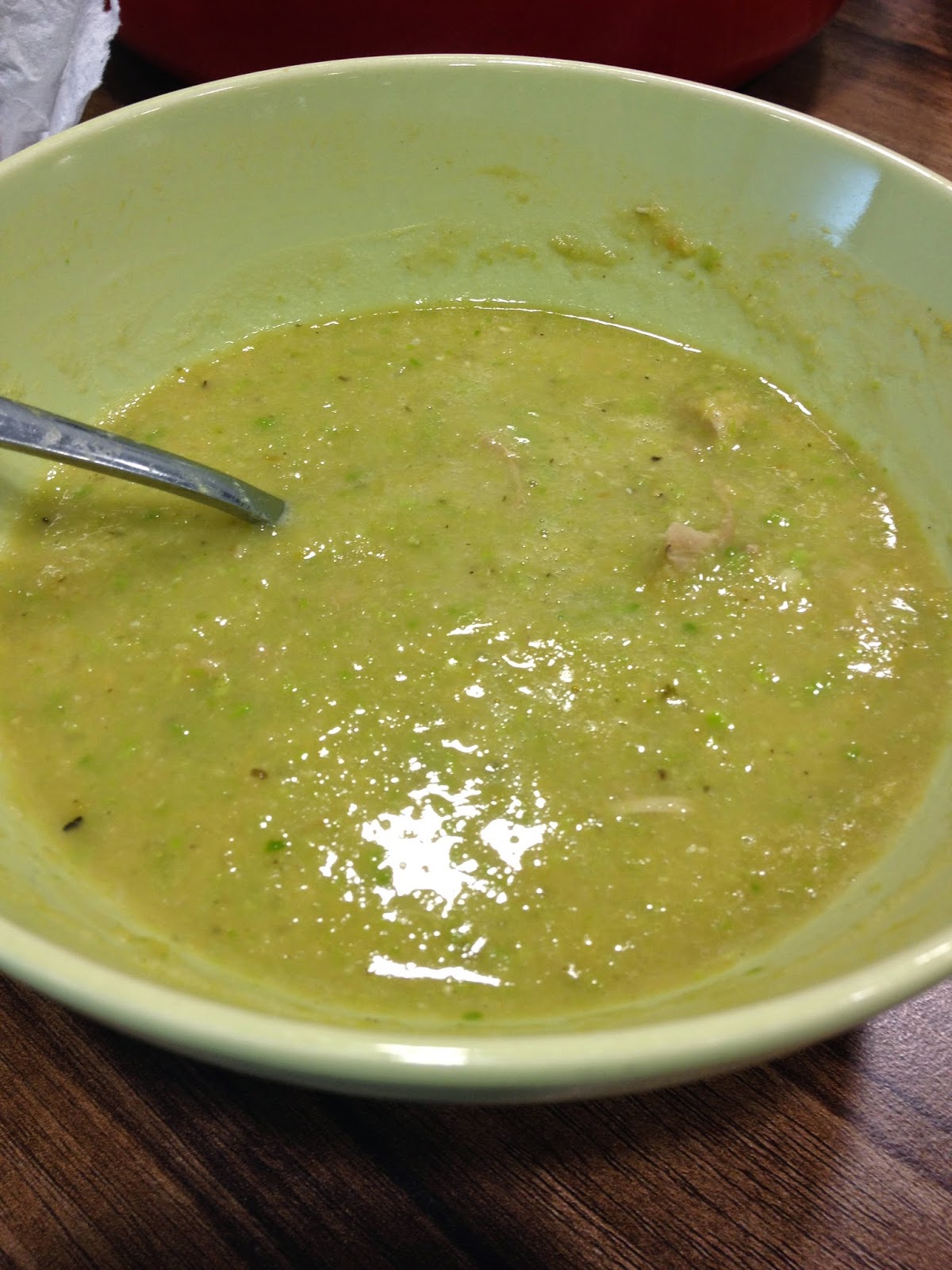
O says the soup looks like sick. It does. I pureed the soup
in response to this comment and it now looks like pureed sick. However it is yummy
tasty and will provide me with five free lunches at work.